- A week dominated by the UN General Assembly and the headlines that come with it, but underneath it all, a few genuinely good stories were quietly unfolding — one from the lab, one from underground, and one from a hospital startup with its eye on saving lives.
- Researchers from the Hebrew University of Jerusalem and Sheba Medical Center have put scientific weight behind something most people already suspected: company is good for you, literally. In a study of 108 adults from 54 couples, participants who ate a meal with their partner had smaller blood sugar spikes and recovered faster than when they ate the exact same meal alone — and showed the same pattern when exposed to cold. Lead researcher Prof. Shir Atzil has dubbed the effect "Social Physiology," the idea that our basic regulatory systems simply run better with people we love nearby. It's an early finding, published in Science Advances, but a lovely piece of evidence for something Rosh Hashanah and Sukkot both quietly assume: that meals are better shared.
- Beneath the Old City, archaeologists have uncovered a discovery five excavation seasons in the making: a monumental Second Temple-era complex of ritual baths at the foot of the Temple Mount, likely used by Jewish pilgrims to purify themselves before ascending to worship some 2,000 years ago. Found by Hebrew University's Prof. Uzi Leibner and Prof. Orit Peleg-Barkat at the Ophel, just fifty metres from the ancient Triple Gate, the complex spans some 280 square metres and includes a large central pool and three separate mikvaot, one preserved to its full height of over four metres. Leibner called it "a truly unparalleled phenomenon" — a rare, intact glimpse of how ordinary pilgrims once prepared to enter the Temple.
- And in Rehovot, medtech company UltraSight has raised $24 million to expand its AI-guided cardiac ultrasound platform across American hospitals, bringing its total funding to $42 million. The system is designed to let trained staff, not just specialist sonographers, capture usable heart images under physician oversight — aimed squarely at a real bottleneck in cardiac care, where a shortage of trained imaging specialists can mean patients wait longer than they should for answers. As CEO Davidi Vortman put it, the goal is "greater access to high-quality cardiac ultrasound — expediting care for patients who simply cannot afford to wait."
- On the mat, Omer Barel added a remarkable new chapter to his story. Barel, who lost his left arm to an RPG strike while serving in Gaza in January 2024, won silver in para-taekwondo at the Swiss Open — his first international medal, beating an opponent from France before falling to a Turkish finalist. Barel competed in judo and won Israeli youth championships before his injury; since then he has switched disciplines entirely and is now, only months into international competition, standing on podiums.
- And as Sukkot gets underway, so does one of the country's best-loved traditions: the Tamar Festival returns to the base of Masada and the shores of the Dead Sea for its 26th year, running September 28 to October 2 with a lineup crossing generations and genres, including Berry Sakharof, Noga Erez, Ravid Plotnik and Tuna. Few festivals anywhere pair headline Israeli music with a desert sunrise over the Dead Sea — it's the kind of thing that makes the case for this country's cultural life all by itself.
- As Sukkot begins tonight, it's worth remembering that a temporary shelter has never stopped this country from building things that last — whether that's a discovery two thousand years in the ground, or the quiet, ordinary act of showing up for the people at your table.
25 September 2026
Quote for the Week
“V'samachta b'chagecha” — “You shall rejoice in your festival” (Deuteronomy 16:14, associated with Sukkot, the Feast of Tabernacles, which begins this evening — traditionally called z'man simchateinu, "the time of our rejoicing.")
In Loving Memory
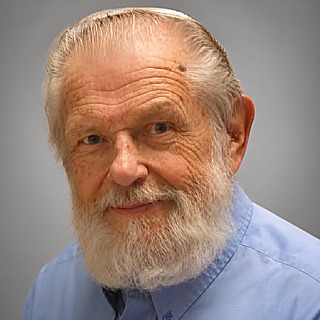
GN Israel is proudly brought to you by Joe, Barry and Adi Cohen, in loving memory of Mark Cohen z"l, who founded this newsletter and ran it until 2011.
With the support of Anglo-Saxon Ra'anana and The Blue Agency.