- With the Tishrei marathon of Rosh Hashanah, Yom Kippur and Sukkot behind us, the calendar finally exhales into an ordinary month — and GN Israel finds this one no less busy than the holidays it follows.
- Three years ago this week, Israel absorbed the darkest day in its history. The clearest answer to it arrived this week in numbers rather than words: Bank of Israel data show GDP has grown by roughly 10% since the eve of the war, despite an estimated 177 billion shekel hit to cumulative output, while the Tel Aviv Stock Exchange has comfortably outpaced Wall Street over the same three years — the TA-35 up about 130% and the TA-125 about 120%, against roughly 80% for the S&P 500 and 101% for the Nasdaq. The shekel, which spiked to 4.078 to the dollar in the war's first weeks, has since strengthened to around 3.08, nearly 20% below its prewar level.
- Startup Nation kept the deals coming too. Island, the Dallas-headquartered, Israeli co-founded enterprise browser company led by CTO Dan Amiga, closed a $400 million round at a $6.4 billion valuation, led by Evolution Equity Partners with Sequoia, Coatue and J.P. Morgan Growth Equity Partners among the backers. The company's secure browser already helps businesses lock down and monitor web activity; the new funding is going toward helping companies govern the AI agents now roaming their systems alongside human employees.
- Smaller but no less telling: Nebius, the Nasdaq-listed AI infrastructure firm, agreed to buy Tel Aviv-based Inferize, a ten-month-old startup, for a reported $100–130 million. Inferize's seventeen engineers have built a way to sharply cut the "cold start" delay before an AI model is ready to answer a request — the kind of unglamorous plumbing that makes the flashier AI products actually usable at scale, and apparently worth paying handsomely for.
- On the medical side, Israeli hematologists across fifteen hospitals, led by teams at Soroka and Rambam, presented a new nine-week chemo-biologic protocol for advanced Hodgkin lymphoma to the American Society of Hematology: a 95% complete response rate and a 100% one-year survival rate among the nearly 100 patients treated so far, with only 4% needing additional radiation. Lymphoma has long been one of the more treatable cancers; this protocol looks set to make it gentler to treat as well.
- And on the judo mat in Baku, 20-year-old Kerem Primo took silver in the women's under-63kg category at the World Judo Championships — following a bronze at the Budapest Grand Slam last month and continuing a rapid climb up the senior ranks for a judoka who was winning junior European titles barely a year ago.
- A quiet month on the calendar, then, but not on the ledger: an economy that kept growing through the hardest three years in its history, two more serious bets on Israeli tech, a genuine step forward against lymphoma, and a 20-year-old bringing home silver from Azerbaijan. Not bad for the month with no holidays in it.
9 October 2026
Quote for the Week
“La'kol zman va'et l'chol cheifetz tachat hashamayim” — “To every thing there is a season, and a time to every purpose under heaven” (Ecclesiastes 3:1, a fitting line for the month now beginning: Cheshvan, the only one on the Hebrew calendar with no festival at all, sometimes nicknamed "bitter" for just that reason. Israel, as ever, found plenty to report in it regardless.)
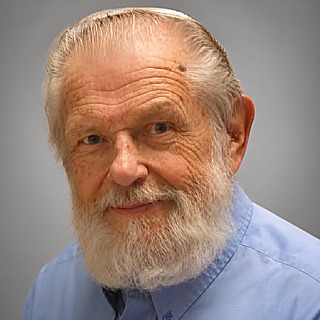
In Loving Memory
GN Israel is proudly brought to you by Joe, Barry and Adi Cohen, in loving memory of Mark Cohen z"l, who founded this newsletter and ran it until 2011.
With the support of Anglo-Saxon Ra'anana and The Blue Agency.