- With the Torah scroll rolled back to the beginning, this Shabbat's portion tells of Noah, the flood and the rainbow that followed. A fitting backdrop for a week of fresh starts, buried history and some very good science.
- Starting with some very old plumbing: archaeologists from the Israel Antiquities Authority have uncovered a 300-metre stretch of Jerusalem's Lower Aqueduct, found ahead of a planned new neighbourhood on the city's edge. Thought to date to the Hasmonean period, in the second and first centuries BCE, the channel carried spring water by gravity alone, dropping barely a metre per kilometre, from the Gush Etzion area through Solomon's Pools to Jerusalem and the Temple Mount. It was repaired and reused through Roman, Byzantine, Crusader, Mamluk and Ottoman times, and stayed in use until about a century ago. The IAA's Amit Re'em called it “an engineering marvel,” and the plan is to preserve it as a public promenade and archaeological park.
- In the lab, researchers at Ben-Gurion University of the Negev, led by Dr Aeid Igbaria, have worked out one way tumour cells survive chemotherapy. In a study published in Redox Biology, the team identified two “guardian proteins,” DNAJB12 and DNAJB14, which under chemo stress open an emergency valve that lets protective proteins escape into the cell and block the machinery of self-destruction. When the bonds holding the guardian proteins together were broken, the cells could be pushed to die as intended. It is early-stage work, but it points toward overcoming chemotherapy resistance in aggressive solid tumours.
- And from the Weizmann Institute, a study in Nature, carried out with colleagues in Kyoto and Barcelona, asks why human knees wear out so easily when our brains are so adaptable. Dr David Gokhman's team built a genome-wide atlas of the switches that control human-specific genes and found that humans dial down the activity of genes making glycosaminoglycans, the molecules that act as shock absorbers in cartilage. Lower levels may leave our joints more prone to osteoarthritis, but in the brain the same dip is linked to a slower-maturing, more flexible mind that keeps learning later in life. The researchers hope the findings will point toward new treatments for joint disease.
- On the business pages, Pluto Security, a cybersecurity company founded only last year by Shahar Bahat, Tal Ofer Regev and Gil Maman, announced a $34 million round led by Jump Capital, bringing its total funding to $42 million. Pluto helps companies keep track of the AI tools, apps and automations their employees are building, and blocks risky actions in real time without switching the tools off.
- And for something lighter: the cranes are back. The first of the season's migrants landed overnight at KKL-JNF's Hula Lake Park in the north, a little later than usual according to field manager Inbar Shlomit Rubin, who spent several nights watching the cameras before spotting them. They fly in family groups from northern Russia, Finland and Estonia, young birds included, and tens of thousands more are expected in the coming weeks. Not bad for a wetland that was drained in the 1950s and later restored.
- An aqueduct that kept delivering for two thousand years, a cell's emergency valve, a company barely a year old and a flock of cranes running a few days late: a week that ran from the Hasmoneans to next year's headlines, and left us with a little more to be grateful for.

16 October 2026
Quote for the Week
“Et kashti natati be'anan, v'hayta l'ot brit beini uvein ha'aretz” — “I have set My bow in the cloud, and it shall be a sign of a covenant between Me and the earth” (Genesis 9:13, from Parashat Noach, read this Shabbat: the rainbow, God's promise of a new beginning once the waters recede.)
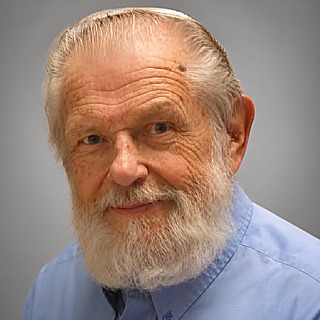
In Loving Memory
GN Israel is proudly brought to you by Joe, Barry and Adi Cohen, in loving memory of Mark Cohen z"l, who founded this newsletter and ran it until 2011.
With the support of Anglo-Saxon Ra'anana and The Blue Agency.