
- This Shabbat we read Toldot, in which Isaac digs a well, has to give it up, digs another, and finally digs a third that nobody argues about. He calls it Rehovot: “room”. After a week with this much room to grow, we know the feeling.
- Israeli cybersecurity company Daylight has raised $80 million to grow, bringing its total funding to $120 million. The round was led by the growth-investment arm of Goldman Sachs. Daylight protects companies from hackers by pairing AI “agents”, which watch for suspicious activity, with human security experts who make the tricky decisions, so a business gets a full security team without having to build one. It has 80 employees, 43 of them in Israel, and plans to expand in the US, Europe and Asia. Calcalist estimates the company is now worth about $400 million; the company has not confirmed a figure. Sources: Calcalist (CTech), Ynet, Globes
- A second cybersecurity deal: American company Vanta has agreed to buy Israeli start-up Pillar Security, reportedly for about $150 million in cash and shares. Pillar, founded in 2023, helps companies find the AI tools they are using, test them against attacks, and stop them doing things they shouldn't. Its 20-plus employees will become Vanta's new development centre in Israel, and its two founders will lead Vanta's AI-security work, so the team and the work stay here. The price comes from Calcalist and has not been officially confirmed. (A company that is three years old and already being bought. Some of us took longer to get a driving licence.) Sources: Calcalist (CTech), Runtime Wire
- Tel Aviv start-up Edelbyte has raised $70 million in its first two funding rounds, led by the well-known investors Sequoia and Quiet Capital. Edelbyte makes software that lets companies search and analyse huge amounts of data wherever it is already stored, which the company says is faster and cheaper than older systems. That matters more and more now that AI programs ask far bigger questions of company data. Its four founders spent more than a decade together at Microsoft, building data systems that support dozens of its products. Sources: Globes, SiliconANGLE
- El Al has had its best quarter ever for sales: revenue of $1.27 billion in July to September, a record. Profit was $172 million, down 14% on last year, mainly because of higher fuel prices, a stronger shekel and a one-off accounting cost, so the airline is still very profitable. It is paying shareholders a dividend of about $116 million, and it was added to the TA-35 index of Israel's 35 largest companies for the first time. (If you have tried to find a seat recently, you won't be surprised.) Sources: Ynet, JNS
- Israel's foreign-currency reserves stand at $237.8 billion, up $775 million in October, the Bank of Israel reported. That is about a third of the whole economy's yearly output (34.3%), and nearly $6 billion more than a year ago. Think of it as the country's savings account in dollars, euros and other currencies: a big cushion helps keep the shekel steady and gives the economy a buffer if markets get rough. The all-time high is $241.6 billion, reached in August 2025. Sources: Bank of Israel, Globes
- Researchers at Tel Aviv University and Stanford have shown that an AI program can sharpen its learning skills without being fed any human-made data. Two small AI models were set to work against each other: one invented patterns and the other tried to predict what came next, and each pushed the other to improve. The “student” then learned to predict patterns in text, images, sound, music, computer code and even DNA. The team, led by Dr Yoav Levine, calls it a proof of concept with small models, and says real knowledge of the world still needs real data. The hope is better AI with less need for huge amounts of data. It is a preprint, which means other scientists have yet to review it. (Two students, no teacher, and both improved. Not how we remember school.) Sources: Ynet, The Jerusalem Post
- A new blood test developed at the Weizmann Institute and the Hebrew University spotted early breast cancer with about 95% accuracy in a study published this week in the journal Nature. Rather than looking for cancer's genetic damage, the test reads the chemical “tags” on tiny pieces of DNA floating in the blood. The same approach was about 81% accurate at telling which patients' cancer would return, which could one day help doctors treat the right people sooner. This is early research: the main result comes from 77 patients and 30 healthy women, the test needs specialised equipment, and it is not yet available to patients. Sheba and Kaplan medical centres helped expand the testing to 188 patients. Sources: Ynet, The Times of Israel
- Hebrew University researchers, led by Prof. Ehud Cohen, have found a possible new target against diseases such as Alzheimer's and Huntington's. In tiny laboratory worms, turning down a process called UFMylation helped cells clear away the harmful, clumping proteins linked to those diseases: the worms were about 35% less paralysed in an Alzheimer's model and lived about 13% longer. To be clear, this is worm research, published in Nature Communications. The team says it is still far from a treatment, and switching the process off completely harmed human cells, so any future medicine would need a careful touch. Sources: EurekAlert (Hebrew University release), TPS-IL
- Visitors are coming back: 152,400 people visited Israel in October, about 16% more than in October last year, according to the Central Bureau of Statistics. Tourism is still recovering, with about 958,000 arrivals from January to October against roughly 1.07 million in the same period last year, but the direction is up. That is good news for hotels, guides, restaurants and taxi drivers, and a good reason for the rest of us to visit our own sights before the crowds return. Sources: JNS, Trading Economics
- A 17-year-old American student, only two days into a study programme in Israel, has found a 3,300-year-old amulet on a school trip to Tel Gezer National Park. Shiloh Attoun, from the Alexander Muss High School in Israel, found a scarab (a beetle-shaped charm) decorated with two cobras, which Prof. Ido Koch of Tel Aviv University dates to the Late Bronze Age, when Gezer was an important Canaanite city. The Israel Antiquities Authority collected it for the national collection and gave him a certificate of appreciation. (Most visitors bring home a souvenir. He handed one to the nation.) Sources: The Jerusalem Post, JNS
- A study of Tel Shiqmona, on the Carmel coast near Haifa, suggests that its famous Iron Age purple-dye factory was run like a well-organised workshop that changed jobs with the seasons. University of Haifa researchers found an olive press, purple-stained pottery and 16 loom weights in the same building, plus layers of animal dung and wood ash showing that livestock were sheltered there too. Their idea is that olives were pressed in late autumn, cloth was made in spring after the sheep were shorn, and animals used the space in between. It is an inference from the finds rather than a month-by-month record, and the rooms date to roughly 790–740 BCE. (Making every room do three jobs: a trick Israeli homeowners will recognise.) Sources: The Times of Israel, PLOS ONE study (via CiteDrive)
- Boris Shtonda, a 29-year-old reservist from the IDF's Duvdevan unit who lost his right leg in Gaza in November 2023, finished the New York City Marathon on 1 November with a prosthetic leg, in 6 hours 31 minutes 41 seconds. Just three weeks earlier he completed the Ironman World Championship in Hawaii: a 2.4-mile swim, a 112-mile bike ride and a full marathon run. His message, in an interview with Ynet, is simple: don't look for reasons you can't, find the way you can. Sources: The Jewish Chronicle, JNS
- And in basketball, Hapoel Tel Aviv beat city rivals Maccabi Tel Aviv 105–87 in the Israeli league derby on 1 November, with Vasilije Micic scoring a season-high 31 points. Whoever you support, one city, two teams and 192 points make a fine evening's entertainment. Sources: The Jerusalem Post, Eurohoops
- Cyber deals, a blood test with a bright future, a record quarter for El Al, a teenager who found history and a veteran who finished two of the world's toughest races: that's GN. Shabbat shalom, and have a good week.
Quote for the Week
“In Israel, in order to be a realist you must believe in miracles.” (Attributed to David Ben-Gurion, Israel’s first prime minister. A fitting line for a week in which a teenager finds a 3,300-year-old charm on his second day in the country, a veteran finishes two of the toughest races in the world, and an airline sets a sales record. Realistic or miraculous? In Israel, usually both.)
Browse all past issues → · About GN Israel · Join our list · Privacy · Accessibility
Get the Good News delivered, free
Join the GN Israel distribution list and receive each new issue by WhatsApp.
Join our list →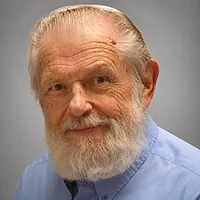
In Loving Memory
GN Israel is proudly brought to you by Joe, Barry and Adi Cohen, in loving memory of Mark Cohen z"l, who founded this newsletter and ran it until 2011.
With the support of Anglo-Saxon Ra'anana and The Blue Agency.