
- This Shabbat we read Vayetzei, in which Jacob dreams of a ladder with angels going up and down, and wakes up to say “Surely the Lord is in this place”. A ladder is also the theme of one of this week’s stories, and you will not guess who built it.
- Israeli cybersecurity start-up Corma has raised $125 million, which values the company at $1 billion, only three months after it came out of hiding in August. The round was led by the investment firm NEA, with Sequoia Capital, Khosla Ventures and Coatue also taking part, and Corma has now raised $185 million in total. It builds AI “agents” that work alongside a company’s existing security tools, investigating threats and handling routine defensive jobs on their own, so that human experts can concentrate on the hard cases. From secret start-up to billion-dollar company in three months, with a team of about 25 people in Tel Aviv and San Francisco: not bad! Sources: Calcalist (CTech), Ynet
- Ramon.Space, the Israeli company named after Ilan Ramon, Israel’s first astronaut, has raised $124 million in a funding round led by the investment firm PSG, with Micron Technology, Senvest and Phoenix Financial among the new investors. The company builds computers that can survive the radiation and extreme temperatures of space, so that satellites can store and process their data in orbit instead of beaming everything down to Earth first. The money will help it build more of them to meet growing demand. A data centre with a view, you might say. Sources: Globes, Calcalist (CTech), The Jerusalem Post
- Israel’s economy grew at an annual pace of 8% in July to September, according to the Central Bureau of Statistics’ first estimate, which is 1.9% up on the previous three months. A big part of that comes from a change in how statisticians count the output of Israeli companies that produce abroad; leave that out and growth was about 4% a year, which is still healthy. Compared with the same quarter last year, the economy is 6.7% bigger (2.8% without that adjustment). Investment rose by 11.3% at an annual pace and household spending by 6.4%. Whichever way you count it, the arrow points up. Sources: JNS, Trading Economics
- Good news for the household budget: prices fell by 0.1% in October, against forecasts of a rise, and the yearly inflation rate dropped to 1.1% from 1.6% in September. That is the lowest in more than five years and comfortably inside the Bank of Israel’s target range of 1% to 3%. Fresh fruit got 2.8% cheaper, and transport costs fell, while clothing and fresh vegetables went up. Home prices continued to slip, and are about 1.5% lower than a year ago. Sources: JNS, Trading Economics
- According to the International Monetary Fund’s latest projections, Israel’s economy will be the 25th largest in the world this year, up from 27th last year, with a projected output of about $747 billion, ahead of Sweden and Ireland. It is a forecast, and the lead over Sweden is small, so the ranking could shift, and part of the rise comes from the stronger shekel making Israel’s output worth more in dollars. Still, it is the first time Israel has made the top 25. Sources: The Algemeiner, Jewish News
- The credit-rating agency Moody’s has kept Israel’s rating at Baa1 with a stable outlook. A credit rating is like a score for a borrower: the steadier it is, the cheaper it is for the country to borrow. Moody’s also raised its growth forecast for this year to 5% from 3.7% (mostly because of the same statistical change mentioned above) and cut its forecast for the government’s budget deficit to 5% of output from 5.9%, thanks to higher tax income. It now expects the country’s debt to stand at 68.5% of output, down from 70.1%. Sources: Globes, Calcalist (CTech)
- Researchers at the Technion have built a tiny wearable sensor that aims to measure blood pressure continuously, without the squeezing cuff. It sends short pulses of light into the skin, which create ultrasound waves inside an artery, measures how the artery widens with each heartbeat, and uses AI to work out the pressure. In first tests with volunteers it captured the pressure wave 100 times a second, and the team, led by Prof. Amir Rosenthal and Prof. Daniel Lange, reports “promising” results in the journal Nature Communications. To be clear, this is an early proof of concept: no accuracy figures have been reported and it is not a product yet. The hope is that one day it could sit in a smartwatch or a patch, and the doctor’s arm squeeze will become a thing of the past. Sources: Ynet, EurekAlert (Technion release)
- An Israeli AI tool aims to warn of Alzheimer’s disease years before symptoms appear. It was developed by Dr. Amir Glik at Clalit’s Beilinson Hospital with Ariel University, and is being commercialised by the company ALZAI Health. It works from information that is already in medical records, such as routine blood tests, existing diagnoses and basic personal details, so no brain scan is needed. The company says it has been checked against more than 1.6 million patient records in Israel and the United States. To be clear, it estimates risk and does not diagnose anything, and the reports give no accuracy figures, so it is one to watch. Sources: JNS, Israel National News
- Thank you, Doctor! Dr. Uriel Trahtemberg, head of the intensive care unit at the Galilee Medical Center in Nahariya, was on a Lufthansa flight from Israel to Frankfurt on Sunday night when a flight attendant, who had accidentally eaten sesame, suffered a severe allergic reaction. The attendant’s own emergency injector had not delivered its medicine, so Dr. Trahtemberg, one of several doctors on board, found adrenaline in the plane’s emergency medical kit, injected it and helped to stabilise the patient. The plane landed in Belgrade, where paramedics took the attendant to hospital. He says it was simply professionalism. Sources: JNS, Israel National News
- Which brings us to the ladder. At the Ramat Gan Safari, two female gorillas, the half-sisters Amelia and Lisha, formed a “living ladder” to reach leafy branches about 4.5 metres (15 feet) up. Lisha got down on all fours and Amelia climbed onto her back. Researchers from Tel Aviv University, Michael Levitzky and Prof. Israel Hershkovitz, saw it happen three times, in 2021, 2024 and 2025, and report it in the journal Primates as a rare example of spontaneous cooperation between adult gorillas, one they say is relevant to understanding how cooperation evolved in humans. Neither gorilla was trained to do it, and the sisters do not usually spend much time together. The researchers add a note of caution: with only three sightings, they cannot say whether the gorillas planned it or signalled to each other first. Sources: The Jewish Chronicle, The Jerusalem Post, JNS
- And in basketball, Maccabi Tel Aviv beat city rivals Hapoel Tel Aviv 86–75 in the final of the Israeli League Cup (the Winner Cup) on 9 November, for the club’s 12th title in the competition. Maccabi, who had lost the league derby 105–87 eight days earlier, trailed by as many as 23 points in the third quarter, then outscored Hapoel 35–13 in the fourth, with Jimmy Clark III top scorer on 24 points. Whichever side you support, that is a game worth staying up for. Sources: Eurohoops, Ynet
- Start-ups growing up fast, an economy in the world’s top 25, a blood-pressure sensor without the squeeze, a doctor who came to the rescue in mid-flight and two gorillas with a ladder: that’s GN. Shabbat shalom, and have a good week.
Quote for the Week
“The future cannot be predicted, but futures can be invented.” (Dennis Gabor, the Hungarian-British physicist who won the Nobel Prize for inventing holography. A fitting line for a week in which a start-up goes from hiding to a billion-dollar valuation in three months, a Technion team invents a blood-pressure sensor without the squeeze, and two gorillas invent a ladder.)
Browse all past issues → · About GN Israel · Join our list · Privacy · Accessibility
Get the Good News delivered, free
Join the GN Israel distribution list and receive each new issue by WhatsApp.
Join our list →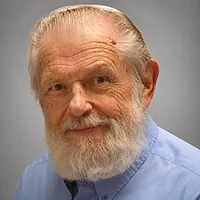
In Loving Memory
GN Israel is proudly brought to you by Joe, Barry and Adi Cohen, in loving memory of Mark Cohen z"l, who founded this newsletter and ran it until 2011.
With the support of Anglo-Saxon Ra'anana and The Blue Agency.